
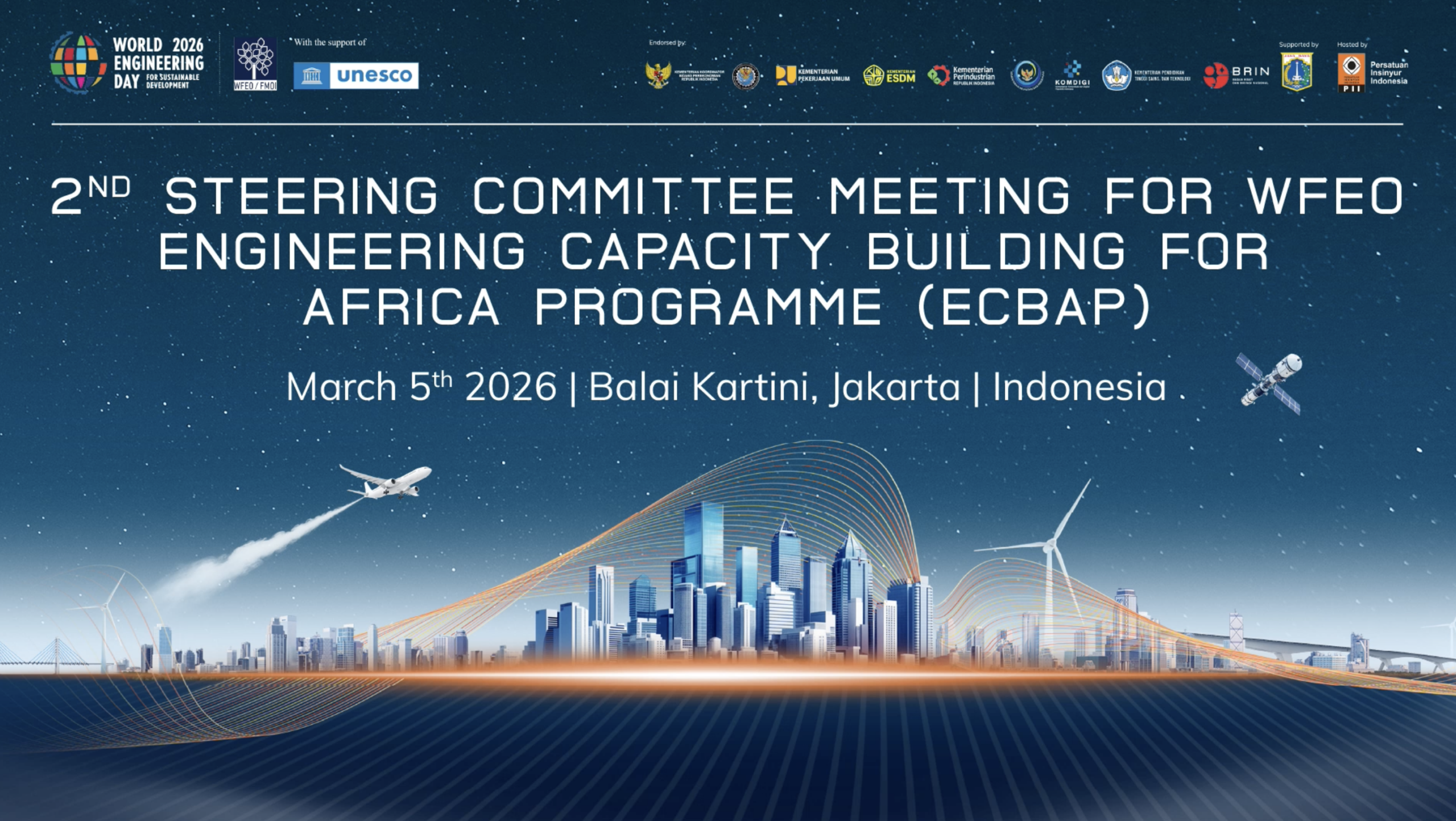
On 5 March 2026, the Second Steering Committee Meeting of the Engineering Capacity Building for Africa Programme (ECBAP) was successfully held in Jakarta, Indonesia, on the sidelines of the celebrations of the World Engineering Day for Sustainable Development.
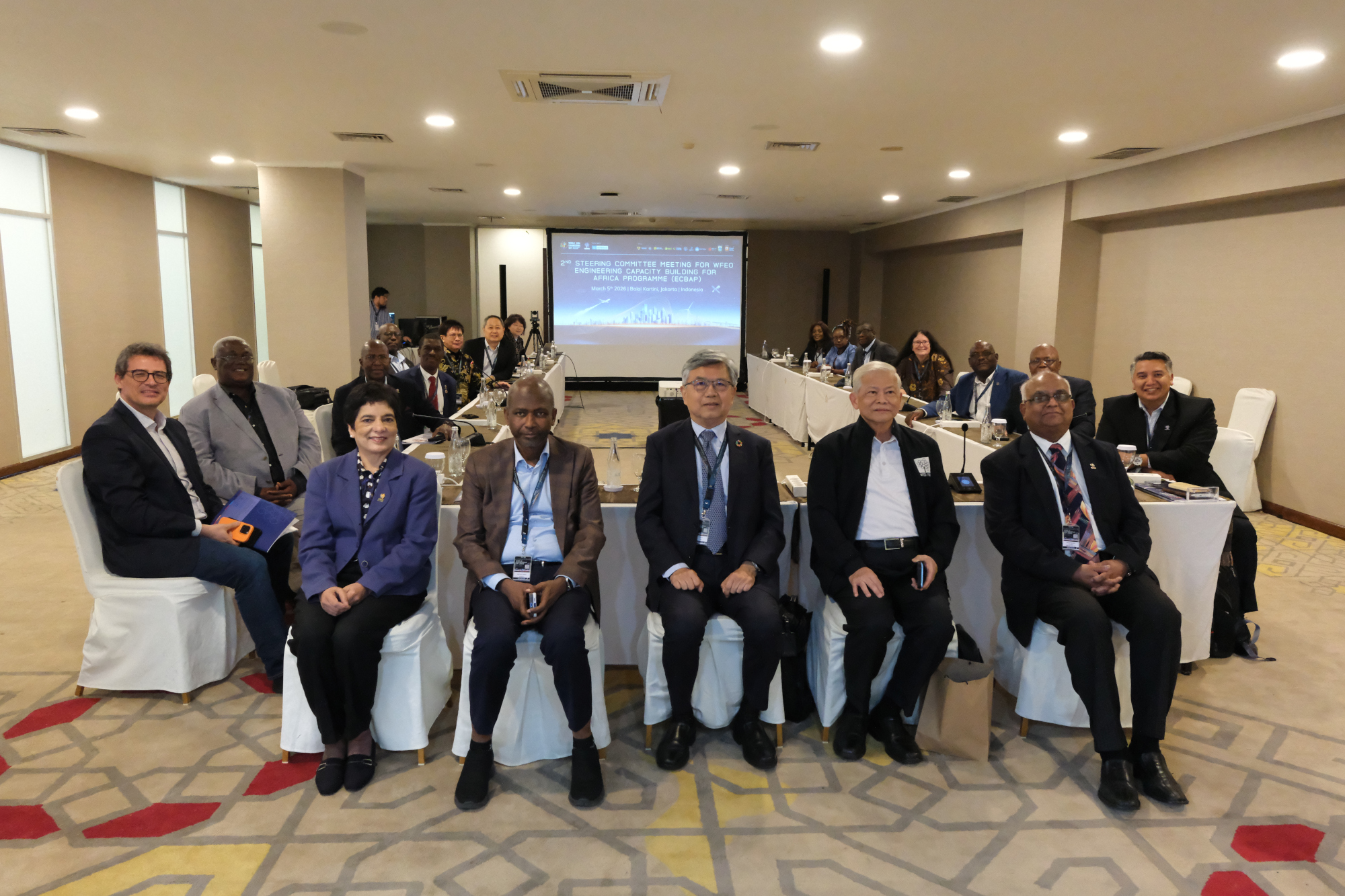
Group photo of the 2nd ECBAP Steering Committee Meeting participants
The meeting brought together representatives from WFEO leadership and Standing Technical Committees, Governments, UN system, international organizations, regional engineering bodies, and partner institutions to review the programme’s progress and discuss its future development.
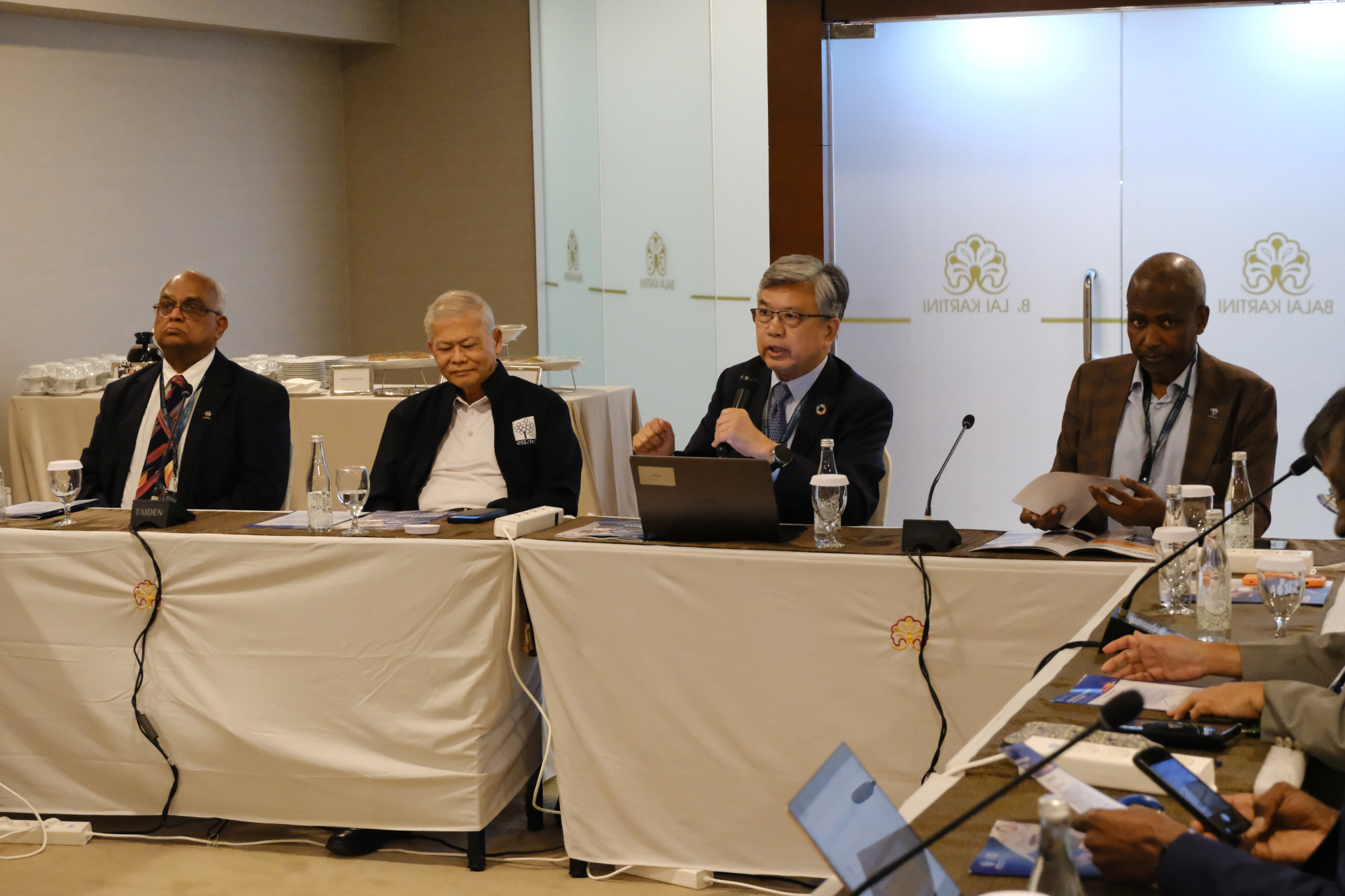
WFEO President-Elect K.N.Gunalan; WFEO President Seng Chuan Tan; Gong Ke, Chair of the WFEO Special Task Force on ECBAP and Mustapha Shehu, Immediate WFEO Past President
Gong Ke, Chair of the WFEO Special Task Force on the Engineering Capacity Building for Africa Programme (ECBAP), highlighted the steady progress achieved since the launch of ECBAP. With the guidance of the Steering Committee and the collaboration of international partners, the programme has advanced in engineering capacity building, international cooperation in engineering science and technology, and institutional development.
Seng Chuan Tan, WFEO President, reaffirmed WFEO’s commitment to advancing ECBAP as a flagship international cooperation initiative for engineering capacity development. He stressed the importance of expanding partnerships, consolidating practical experience, and further strengthening the programme’s impact in Africa.
K.N.Gunalan, WFEO President-elect and Chair of WFEO-UN Relations Committee, highlighted that WFEO is the Friend of the Coalition on Science, Technology, and Innovation for Africa’s Development. He suggested leveraging this relationship to further expand the cooperation and initiatives.
Moez Chakchouk, Executive Director of the WFEO, pointed out that the ECBAP demonstrates strong organizational execution and cross-regional coordination capabilities. WFEO will build upon ECBAP’s existing foundation to actively promote cooperation with the secretariat, further enhancing operational capacity and service levels.
The Steering Committee members listened to a report on the programme’s progress in 2025 and outlined key priorities for 2026, presented by Wang Guanyi, Head of the ECBAP International Programme Office. For more information, please check ECBAP 2025 Annual Report.
Representatives from international organizations expressed strong support for the initiative. UNESCO noted that ECBAP aligns closely with its engineering development strategy, particularly in advancing engineering education and policy capacity. UNIDO emphasized the importance of strengthening engineering capabilities to support Africa’s digital and industrial transformation. UNDESA highlighted ECBAP as a valuable case of digital capacity building presented at multiple UN platforms.
Regional engineering organizations also reaffirmed their commitment to the programme. The Federation of African Engineering Organisations (FAEO) pledged to mobilize its national members to actively participate in programme activities. The Pan American Federation of Engineering Societies (UPADI) expressed interest in sharing experiences and promoting knowledge exchange between Africa and the Americas. The Federation of Engineering Institutions of Asia and the Pacific (FEIAP) emphasized collaborative efforts to provide capacity building support for African women and young engineers. The International Research Center of Big Data for Sustainable Development Goals (CBAS) expressed its willingness to collaborate with the ECBAP to promote the deep integration of engineering education and practice.
Government representatives also underscored the programme’s growing impact. Paul Mavima, Minister of National Housing and Social Welfare of Zimbabwe, announced plans to establish a Local Programme Office at Chinhoyi University of Technology and to develop a Centre of Excellence for Engineering Capacity Building to support local implementation of ECBAP. Luo Hui, Executive Secretary of the leading Party members group and Director General of the Department of International Affairs of the China Association for Science and Technology (CAST), emphasized the importance of further strengthening institutional mechanisms, enhancing cooperation quality, and building a diversified and sustainable resource support system for the programme’s long-term development.
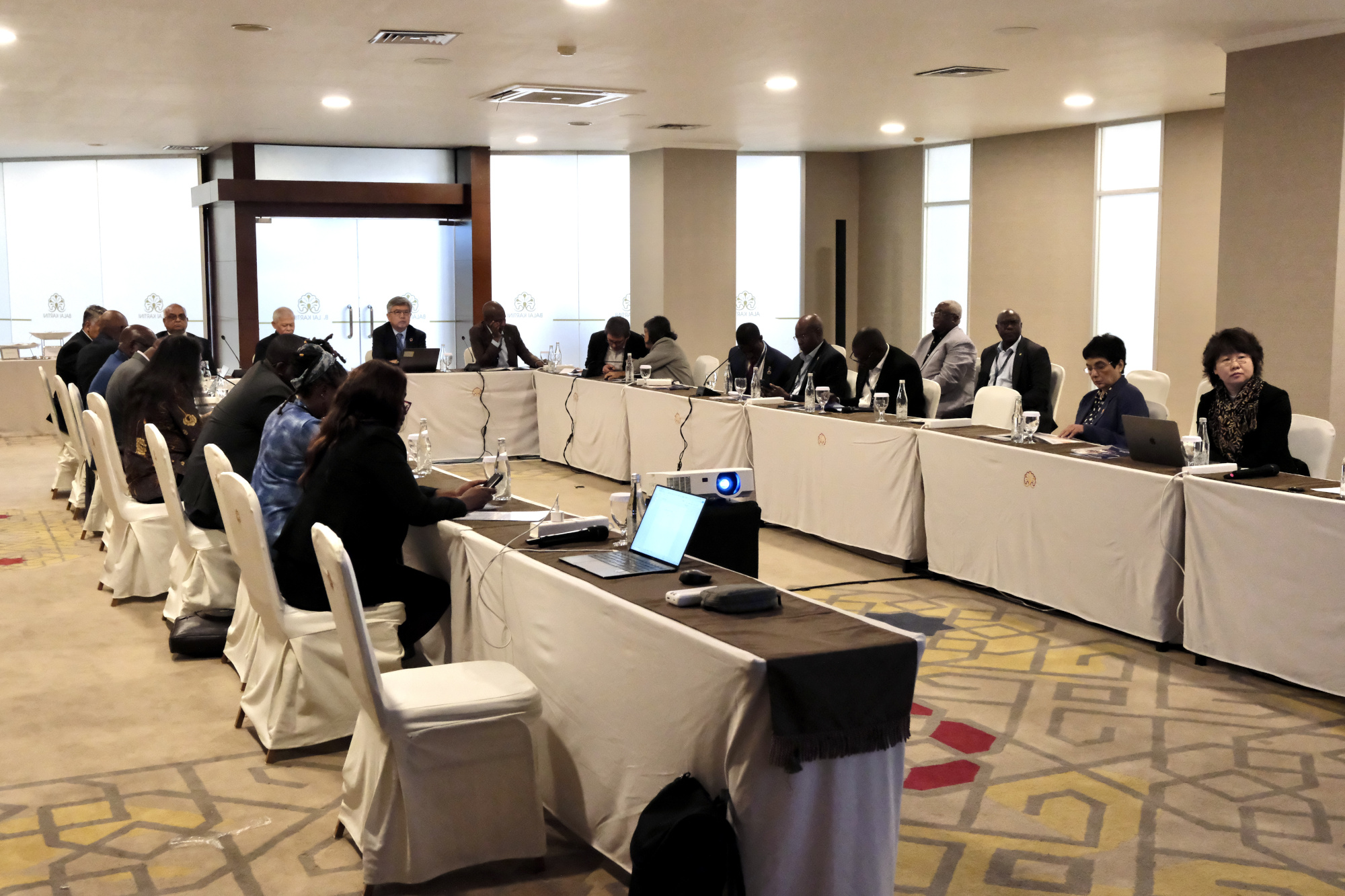
The successful convening of the Steering Committee meeting marks an important milestone in the development of ECBAP and sets a clear direction for the programme’s next phase.
Video presentation of ECBAP
For more information:
ECBAP 2025 Annual Report – PDF
ECBAP 2025 Annual Report – CANVA
WFEO Engineering Capacity Building for Africa Programme (ECBAP)
ECBAP Officially Endorsed as Programme of the UN Science Decade
WFEO-ECBAP Participation at the 2025 UN STI Forum
MAR
2026